
Paint correction is controlled by clear-coat refinement, not unlimited scratch removal. Our paint correction service in Huntington Beach, CA uses inspection, paint measurements, test spots, compounding, and polishing to improve defects without removing more material than the finish can safely support.
Paint correction improves the finish by leveling a microscopic amount of clear coat around visible defects. That creates an important limit. The objective is not to make every mark disappear regardless of depth. The objective is to improve clarity while preserving enough clear coat for the paint system to remain healthy.
Swirl marks, wash marring, oxidation, haze, water spotting, and light scratches can often respond well to machine polishing. Deeper scratches are different. Removing one completely may require polishing farther into the clear coat than is sensible, especially on a panel that has already been corrected, repainted, or measured thinner than surrounding areas.
That is why the safe stopping point matters as much as the polishing itself. Paint correction becomes a judgment process involving defect depth, paint thickness, clear-coat behavior, panel history, and the visual result achieved during testing. Sometimes the correct decision is full removal. Sometimes it is reduced. Sometimes the safest choice is to leave a defect alone.
New vehicles are not automatically exempt. Transport, storage, dealer washing, drying, and repeated handling can introduce light marring or swirl marks before the vehicle has accumulated significant mileage. If the finish is only contaminated rather than visibly defective, exterior detailing may be more appropriate than polishing a healthy clear coat.
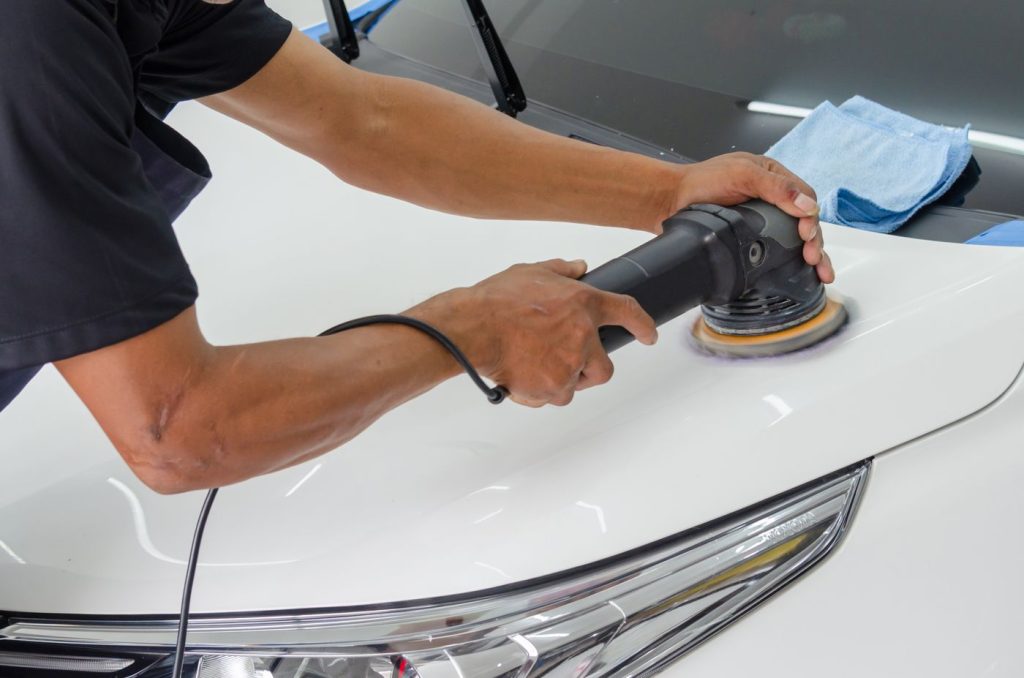
Vehicle size affects the amount of paint that must be inspected and polished, but it does not tell the whole pricing story. Clear-coat type, defect severity, correction depth, previous polishing, and the number of stages required all affect how much work the finish needs.
Vehicle Size | Example Vehicles | Starting Price |
Small | Mustang, Camry, Model 3 | From $600 |
Medium | F-150, Range Rover, Model X | From $850 |
Large | Suburban, Sequoia, Expedition | From $1,200 |
A one-step paint enhancement and a multi-stage correction can involve the same vehicle but very different labor. Light haze may respond quickly to a refining polish, while heavier swirl marks or oxidation may require a stronger cutting stage followed by additional refinement.
Correction time also follows conditions rather than a simple vehicle category. Some jobs can require many hours of inspection, compounding, polishing, wipe-down, and rechecking. Larger or more heavily affected vehicles can take significantly longer because each panel must be corrected without rushing the clear-coat decisions.
Correction works on defects that remain within material that can be safely refined. It does not turn failed paint into healthy paint, and it does not justify removing excessive clear coats simply to improve one deep mark.
A visible scratch may look severe but still respond well to polishing, while another may extend too deeply into the finish to remove safely. Paint thickness, previous correction, panel condition, and test-spot response determine how far the correction should go.
Paint correction is not performed with one machine, one pad, and one compound across every panel. Different clear coats respond differently to pressure, pad material, machine movement, cutting strength, and refinement. The combination is chosen after the finish shows how it reacts.
Rotary, dual-action, and forced-rotation polishers each have different working characteristics. Larger machines suit broad panels, while smaller polishers reach pillars, bumpers, mirrors, and tighter sections that cannot be treated effectively with one large tool.
Wool and microfiber pads provide stronger cutting ability when heavier defects need more correction. Foam pads are commonly used for refinement, finishing, and removing haze left after a more aggressive stage.
Heavier compounds address deeper correctable defects, while finer polishes improve clarity and gloss. Product choice changes according to the paint response rather than following a fixed liquid for every vehicle.
A test section is polished before the full vehicle so the machine, pad, compound, and polish combination can be evaluated. The goal is to find the least aggressive approach that produces the required improvement while preserving unnecessary clear-coat removal.
The process is built around decisions rather than simply running a machine over every panel. Each stage either reveals the true condition, establishes a safer working range, removes a specific class of defect, or prepares the corrected finish for protection.
The paint is inspected under lighting that reveals swirl patterns, haze, oxidation, water spots, scratches, previous polishing marks, and areas that should not be aggressively corrected.
Paint thickness measurements help identify panels where previous work, repainting, or reduced clear-coat depth may change how aggressively the surface should be polished.
The vehicle receives a gentle wash, chemical iron removal, and clay treatment so loose and bonded contaminants do not interfere with polishing or pad performance.
Trim, chrome, panel edges, and other vulnerable areas are taped or protected before compound and polish work begins near them.
A test spot establishes how the paint reacts to a specific machine, pad, compound, and polishing method before that approach is repeated across larger areas.
Where stronger correction is justified, compounding reduces heavier swirls, oxidation, haze, and correctable scratches within the safe working range.
A polishing stage follows the heavier cut to remove micro-marring, improve clarity, and bring the finish to a cleaner final appearance.
Polishing residue is wiped away so oils or fillers do not hide defects and create a misleading impression of the actual correction result.
Wax, sealant, or ceramic coating after correction can be applied according to the desired protection plan once the finish has been corrected.
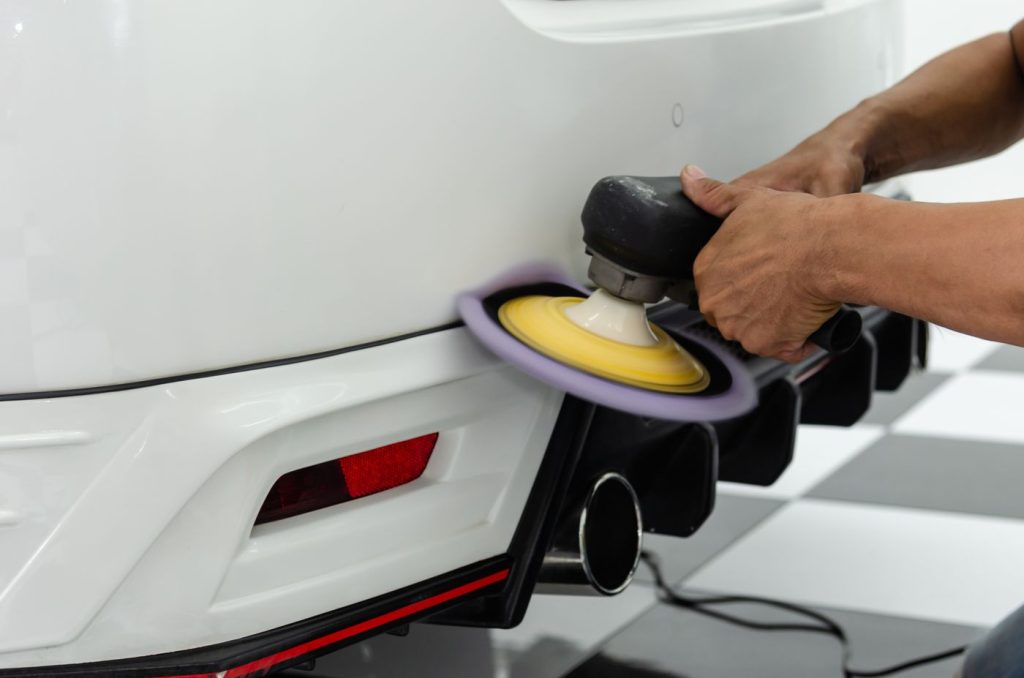
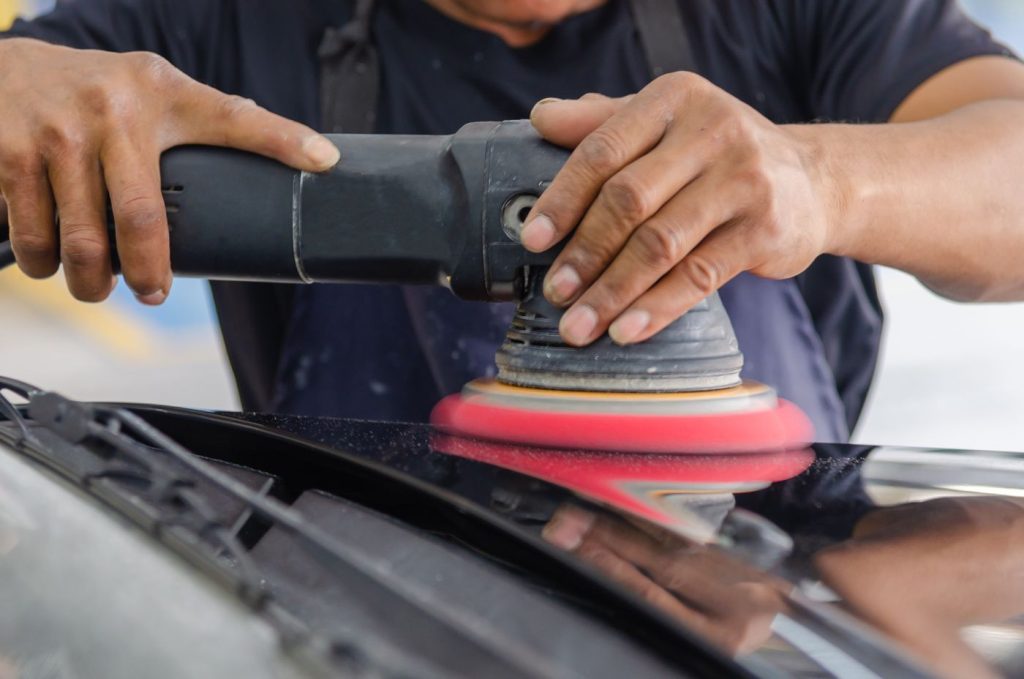
More polishing is not automatically better. The correct approach depends on defect severity, clear-coat health, and how much material can be safely refined. Some finishes need only one polishing stage. Others benefit from compounding followed by refinement. Failed paint belongs outside normal correction entirely.
Paint Condition | One-Step Enhancement | Two-Step Correction | Repaint / Body Shop |
Light Swirls / Mild Haze | Good Fit | Can Improve Further | Not Needed |
Moderate Swirls | Limited Improvement | Strong Fit | Usually Not Needed |
Deeper Scratches | Limited | Partial Reduction | May Be Required |
Recoverable Oxidation | Condition Dependent | Stronger Option | Sometimes |
Peeling / Chipping Clear Coat | No | No | Required |
One-step polishing favors improvement with less cutting when defects are relatively mild. Two-step correction adds a dedicated cutting stage followed by refinement when the finish needs more work. Peeling, cracking, severe clear-coat failure, or damage beyond a safely polishable depth requires refinishing rather than increasingly aggressive machine polishing.
Owners planning additional physical protection after correction can compare paint protection film. Film protects against a different type of damage than ceramic coating, and neither service removes the defects that correction addresses first.
Correction becomes relevant when the finish itself is affecting clarity, not simply when the vehicle is dirty. Direct sunlight, inspection lighting, and strong overhead light often make the underlying defect pattern much easier to see.
Dark finishes often reveal swirl marks and micro-scratches more dramatically than lighter colors, although the correction method still depends on clear-coat condition rather than color alone. Owners of specialty or higher-value vehicles can also review luxury car detailing when the care plan extends beyond polishing.
Scratch depth is judged alongside paint thickness, panel condition, previous polishing, and the way the defect responds during testing. If complete removal would require sacrificing too much clear coat, the better result is partial reduction or leaving the mark alone. Preserving the paint system matters more than forcing one defect to disappear.
Yes. Compounding removes a microscopic amount of clear coat, so excessive cutting, inappropriate pads, repeated aggressive passes, or poor machine control can remove more material than necessary. Measuring paint, testing combinations, monitoring the finish, and stopping at the right point are essential parts of controlled correction.
Two matching vehicles can have different paint thickness, clear-coat hardness, previous polishing, repaint history, wash damage, oxidation, or defect depth. One finish may respond quickly to foam and polish, while another needs stronger cutting. A test spot gives more useful information than assuming every example of the same model behaves identically.
Yes. A new vehicle can collect swirl marks, light scratches, wash marring, or contamination during transport, storage, dealership preparation, and repeated washing before delivery. New paint should still be inspected before polishing. Correction belongs only where the finish has defects that are worth improving.
Swirls that are physically leveled during correction are removed rather than temporarily concealed with wax or fillers. New defects can still be created afterward through improper washing, dirty towels, automatic brushes, or aggressive drying. The corrected appearance lasts only as well as the finish is maintained after the service.
Heavy correction is not routine maintenance because every aggressive polishing cycle removes a small amount of clear coat. Repeating that process unnecessarily reduces the material available for future correction. A better long-term plan is to correct the finish properly once, protect it, and then minimize new defects through safer washing and drying.
Fresh details, foam videos & transformations every week.
Tell Lezama Brother’s Mobile Auto Detail where the vehicle is parked and what service you need. We’ll confirm coverage, property suitability, and whether the work can be completed on-site or requires our Huntington Beach shop.
Fill out the form and get your detailed quote.
Call us if you have any queries!


 Trustindex verifies that the original source of the review is Google.
 Trustindex verifies that the original source of the review is Google.
 Trustindex verifies that the original source of the review is Google.
 Trustindex verifies that the original source of the review is Google.
 Trustindex verifies that the original source of the review is Google.
 Trustindex verifies that the original source of the review is Google.
 Trustindex verifies that the original source of the review is Google.
 Trustindex verifies that the original source of the review is Google.
 Trustindex verifies that the original source of the review is Google.
Before another compound touches the finish, the defect depth, clear-coat condition, correction goal, and protection plan should be clear. Request paint correction from Lezama Brother’s Mobile Auto Detail for an assessment built around the paint you actually have.