
Blog
Car care tips, ceramic coating guides and detailing know-how from the Lezama brothers.
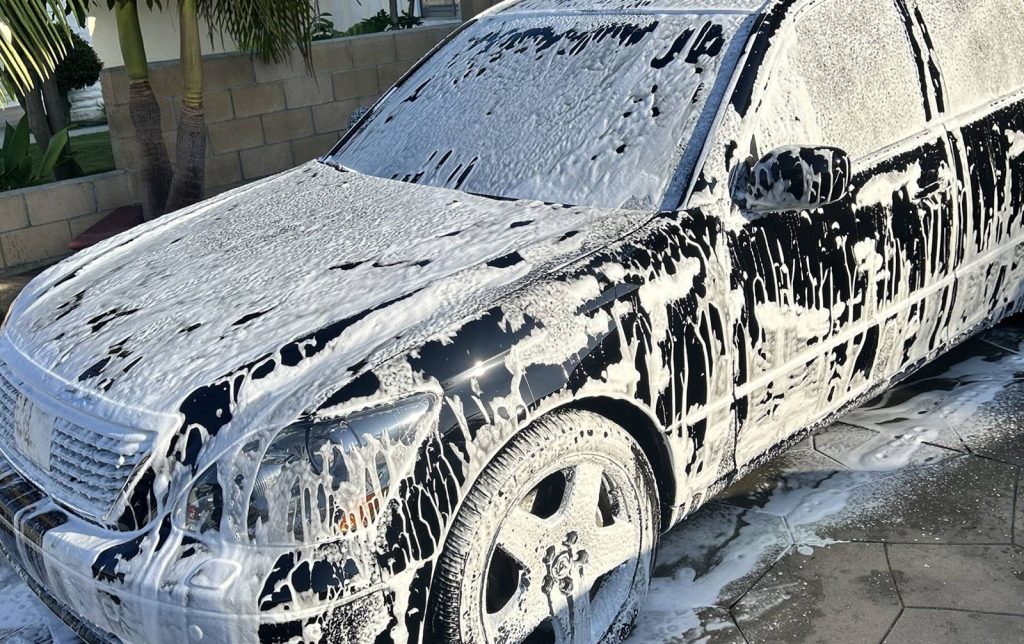
Sun, salt air and freeway grime all add up. Here’s a simple schedule to keep your car looking new year-round.
SoCal driving is tough on vehicles. Intense UV, coastal salt air, dust from the Santa Anas and freeway grime slowly break down your paint and interior. A regular routine keeps things under control:
A proper hand wash removes bird droppings, bugs and dust before they etch into the clear coat. Avoid automated brush washes — they’re the #1 cause of swirl marks.
If your car isn’t ceramic coated, a fresh layer of wax or sealant keeps water beading and adds UV protection.
A full interior + exterior detail with clay bar decontamination resets the whole vehicle — carpets, seats, vents, door jambs and paint.
A ceramic coating stretches all of these intervals and makes every wash faster and easier.
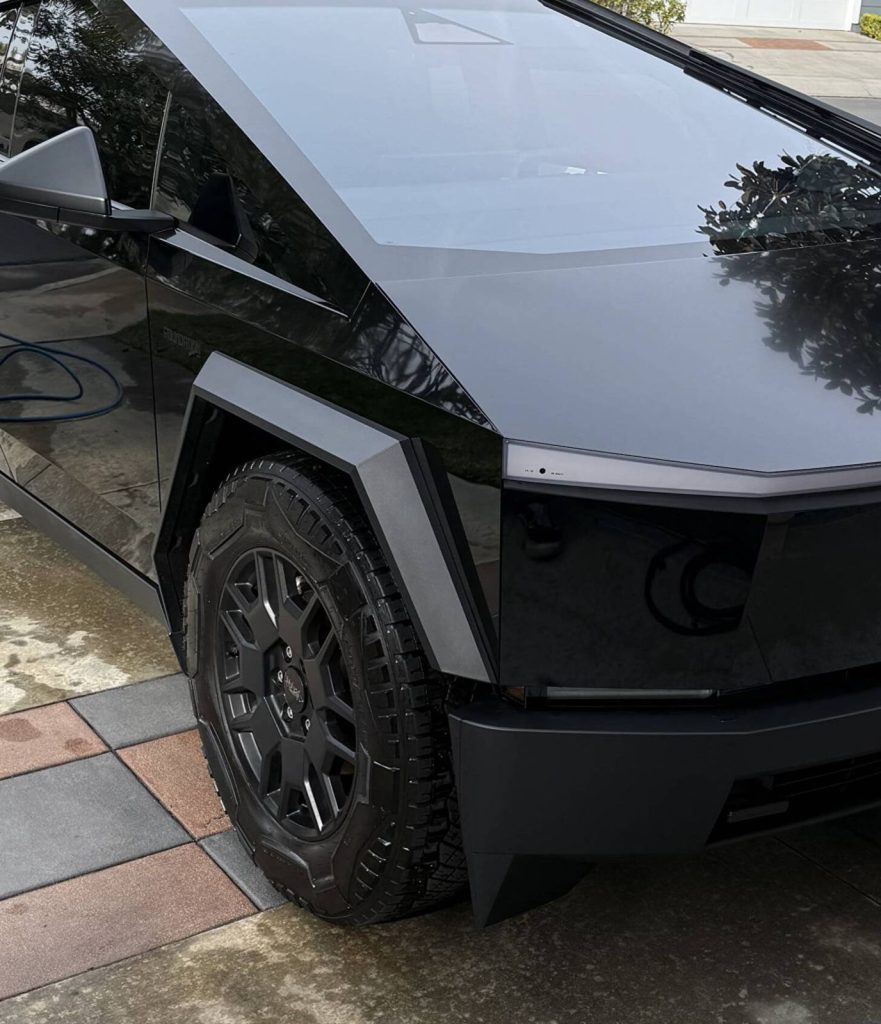
Tesla paint is famously soft. Here’s why so many OC Tesla owners choose ceramic coating.
Tesla owners across Orange County ask us this constantly — and for most, the answer is yes.
Tesla paint scratches and swirls easily. A coating adds a hard, slick layer that helps resist light marring from washing and everyday use.
Large, flat panels show water spots and dirt. The hydrophobic surface of a coating sheds water quickly and keeps them cleaner.
Well-kept paint helps your Tesla hold its value — and a coated car looks newer, longer.
Just remember: a coating locks in what’s under it. We always polish before coating so you’re sealing in a flawless finish, not swirls.
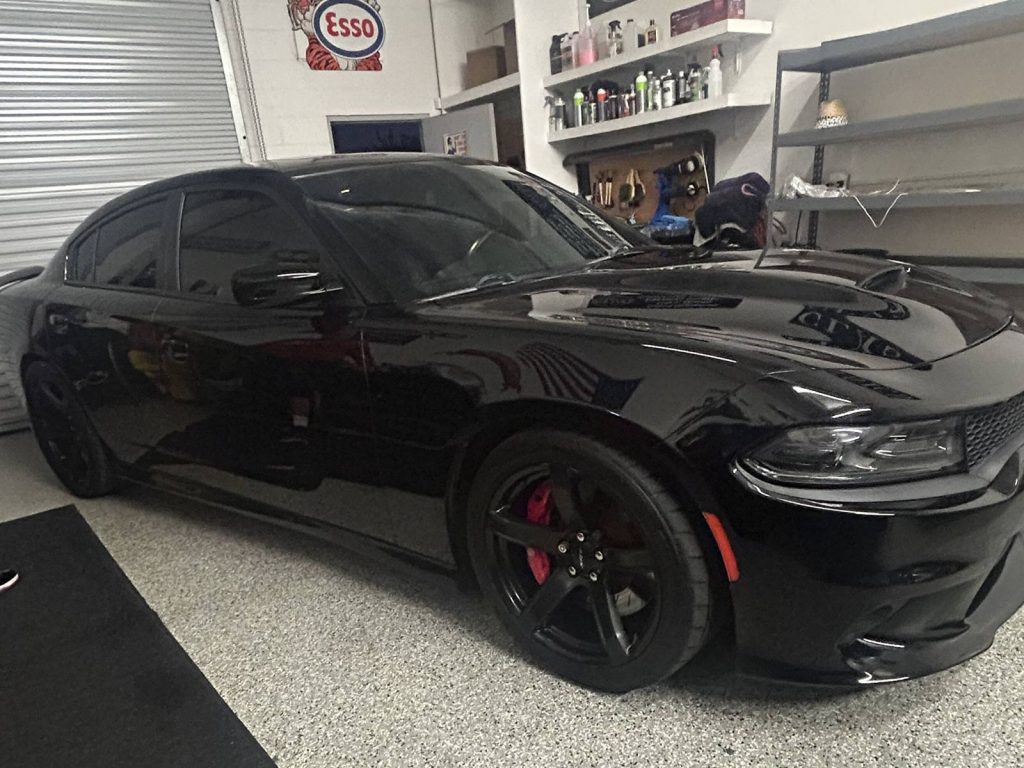
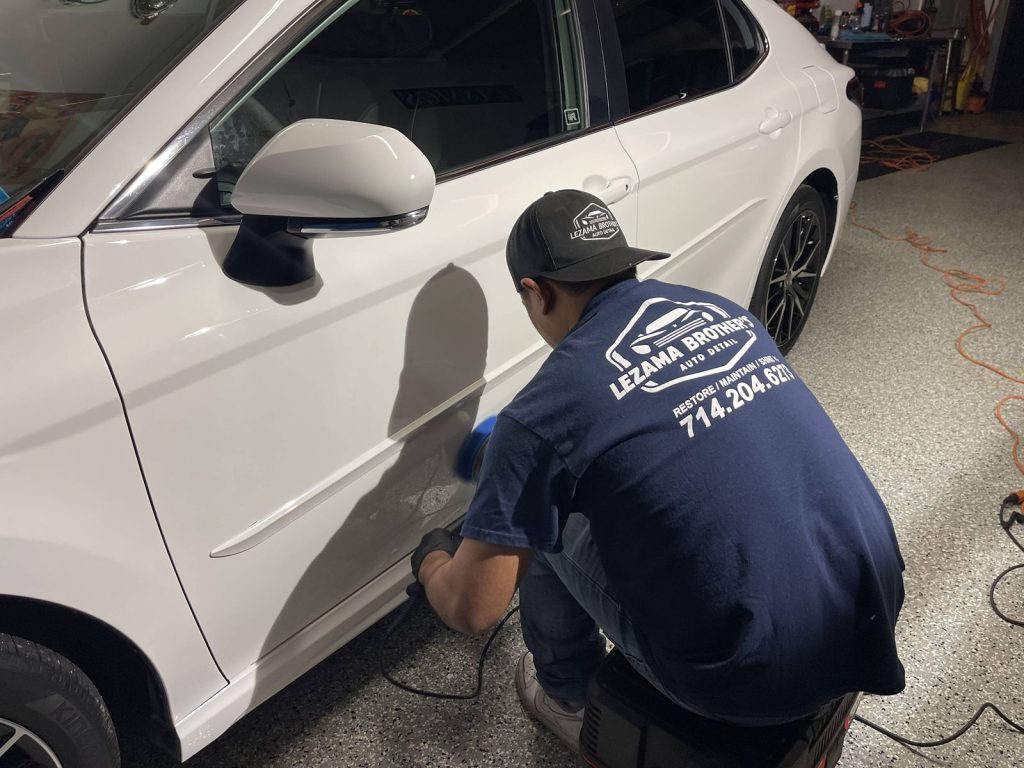
Swirls, holograms and dull paint? These are the telltale signs polishing can fix.
Paint correction uses machine polishing to carefully level the clear coat and remove these defects, restoring depth and clarity. It’s also the ideal prep before ceramic coating.
Dogs, kids and coffee don’t stand a chance. Here’s how a pro interior deep clean works.
Pet hair weaves itself into carpet and fabric, and spilled drinks soak deep into seat foam. A regular vacuum can’t reach it all.
We use specialized tools and brushes to lift embedded hair from carpets, mats and seats before vacuuming.
Hot-water extraction flushes stains, dirt and odors out of upholstery and carpet instead of just cleaning the surface.
For lingering smells, ozone treatment neutralizes odors at the source rather than masking them.
The result? An interior that looks — and smells — like the day you bought it.
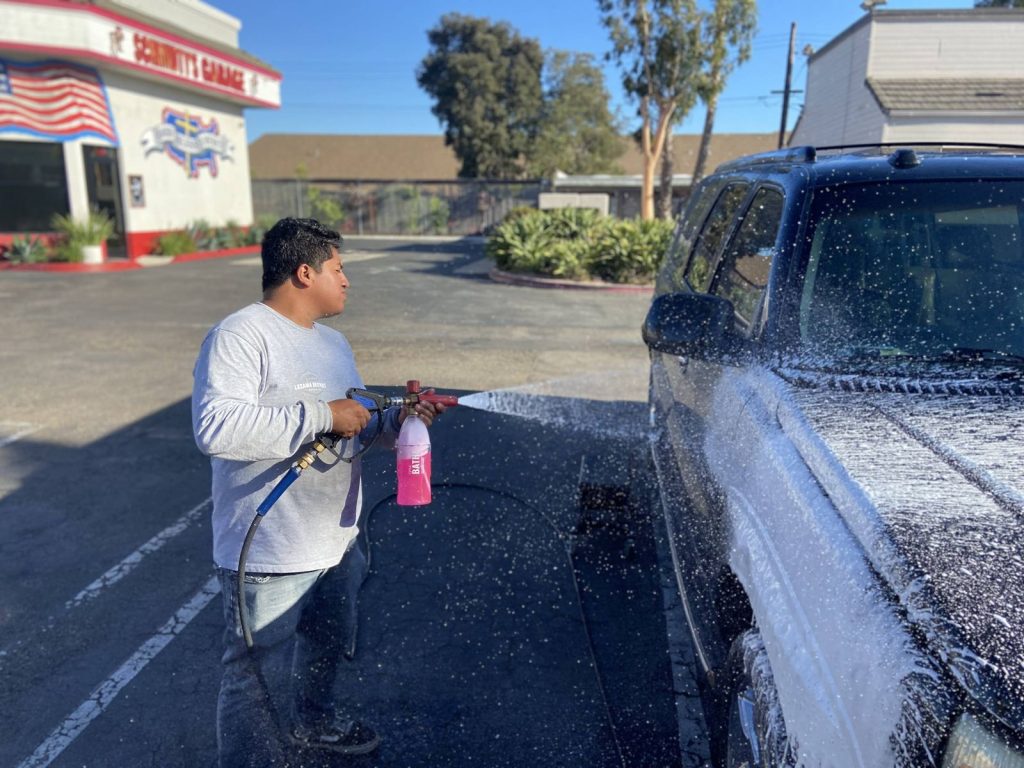
Convenience is just the start. Here’s what you’re really getting with a mobile hand wash.
Tunnel washes use spinning brushes that trap grit from hundreds of cars. A hand wash with clean media is far gentler on paint.
Wheels, door jambs, badges and glass get individual attention — not a 3-minute pass on a conveyor.
We come to your home or office. You keep working, relaxing or spending time with family.
You talk directly with the people doing the work — and they don’t leave until you’re happy.
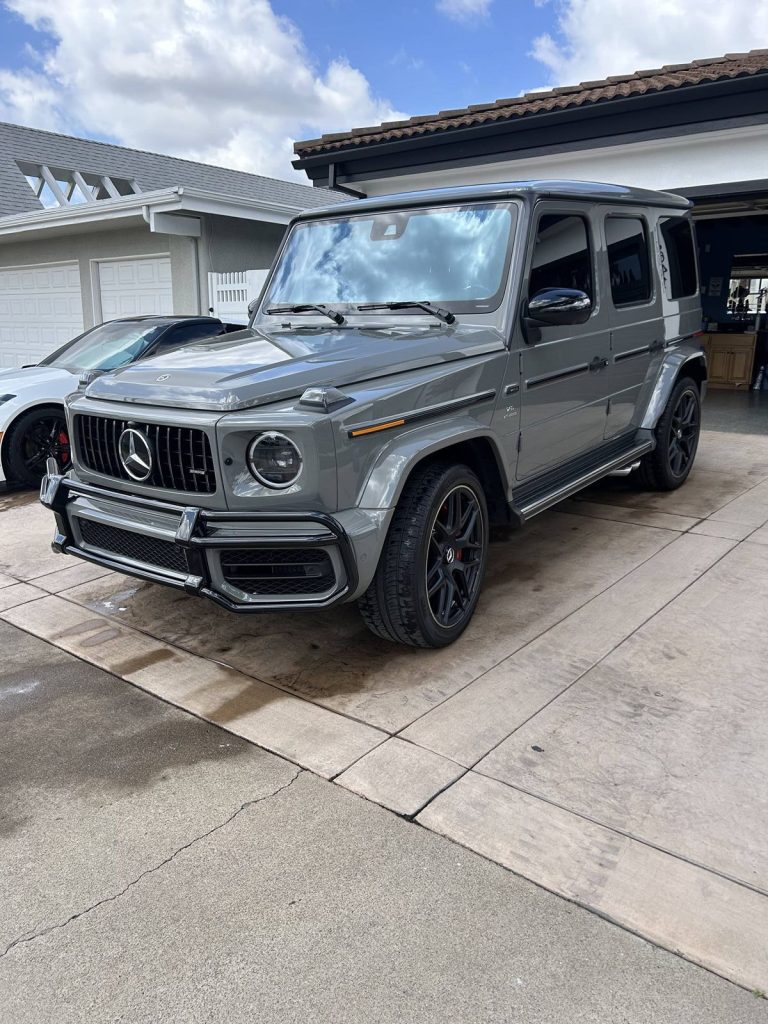
Hazy headlights make any car look older — and reduce your visibility at night.
Most headlight lenses are polycarbonate with a factory UV coating. Over time the California sun breaks that coating down, leaving lenses yellow and foggy.
Quick fixes often clear things up for a few weeks before the haze returns, because the lens isn’t re-protected.
We wet-sand away the damaged layer, polish the lens to full clarity and finish with UV protection so the results last.
It’s one of the most affordable ways to make your car look years younger — and see the road better at night.
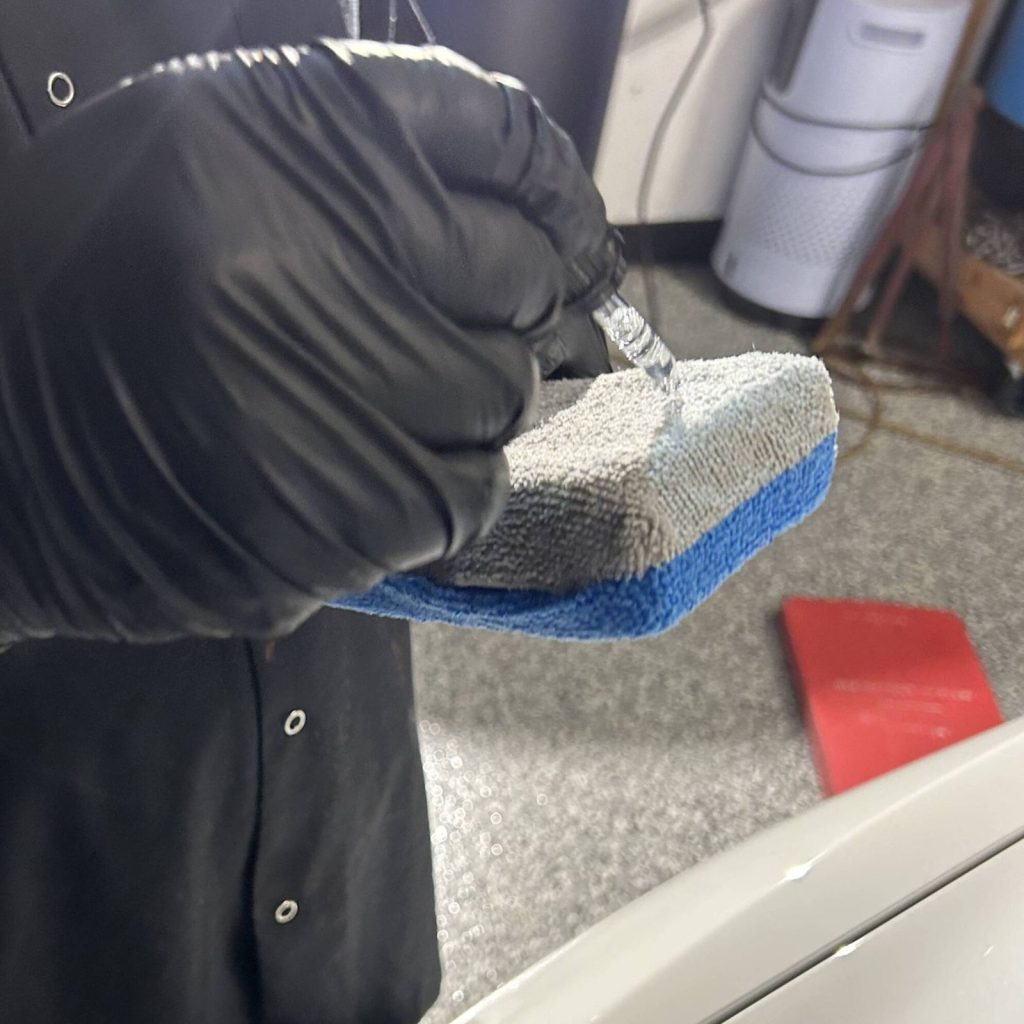
A little care goes a long way. Follow these simple tips to keep your coating performing.