
Brake dust can return after a few drives. Rough paint may never have disappeared after the last wash. Our mobile auto detailing in Downey, CA separates recurring maintenance from problems needing deeper cleaning, correction, or protection.
Downey vehicles move through established neighborhoods, shopping districts, workplaces, and heavily traveled routes including Firestone Boulevard, Lakewood Boulevard, Paramount Boulevard, Florence Avenue, and Imperial Highway. Regular driving leaves predictable maintenance behind: wheels darken with brake dust, lower panels collect road film, glass develops residue, and floor mats pick up dirt again after previous cleaning.
Those problems are expected to return because the vehicle keeps being used. Other conditions are different. Paint that still feels rough immediately after washing may hold bonded contamination. A carpet stain that reappears after drying can require deeper treatment. Swirl marks visible on clean paint are clear-coat defects, so washing them more frequently will not remove them.
Service depth should follow that distinction. Routine exterior dirt can be handled with a mobile car wash in Downey, while embedded cabin soil calls for interior car detailing. When both areas need substantial work, complete car detailing services address them together. Recurring heat or glare, meanwhile, belongs with professional window tinting rather than a deeper cleaning package.

Some vehicle problems naturally return between services. Others remain because ordinary washing or wiping never addressed the material causing them. Knowing the difference helps avoid repeatedly booking the same cleaning when the vehicle actually needs extraction, decontamination, polishing, or another specific treatment.
Brake use continually produces dust that settles across wheel faces, spokes, and barrels, so wheels can look dirty again before the painted body does.
Vacuuming removes loose debris, but ground-in dirt, old spills, and residue deeper within carpet fibers require more involved interior cleaning.
Water can evaporate and leave mineral deposits across paint or glass. More stubborn spotting can remain even after the surrounding surface has been washed.
Swirl marks do not return because the vehicle was washed. Cleaning often makes existing clear-coat marring easier to see once road film disappears.
With mobile auto detailing in Downey, CA, the key question is whether the problem returned through normal vehicle use or remained after proper cleaning. These six signs help determine when maintenance is enough and when another process is needed.
When easier paint maintenance is the goal, ceramic coating protection addresses a different problem from recurring dirt. Drivers concerned about repeated front-end impact can instead review paint protection film options.
If a mark remains immediately after proper cleaning, washing more often is unlikely to solve it. Rough paint, embedded stains, mineral deposits, and clear-coat defects each require a process that addresses what is actually still there.

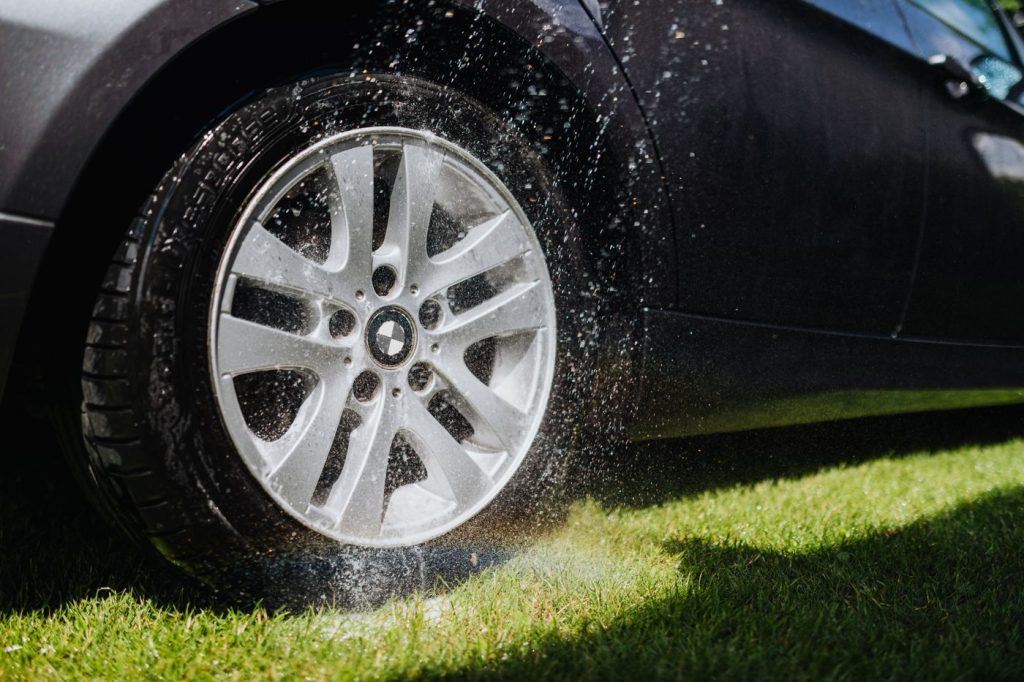
Brake dust is produced whenever the braking system is used, so wheel faces and spokes can darken again before the rest of the vehicle looks dirty. Frequent wheel cleaning may therefore be normal maintenance. Persistent baked-on residue requires more thorough wheel cleaning than simply increasing body-wash frequency.
Clean paint that remains rough often has bonded contamination attached to the surface. Washing removes loose grime, while clay or another appropriate decontamination process addresses particles that remain attached. Paint correction is considered separately when swirls, haze, or scratches within the clear coat also need reduction.
A stain can reappear when residue remains deeper in carpet or upholstery and moves toward the surface as moisture dries. Repeated surface wiping may improve appearance temporarily without removing the source. Deeper cleaning, controlled moisture, extraction where appropriate, and thorough drying provide a more complete approach.
Water spots can contain mineral deposits left behind after droplets evaporate. Fresh deposits may respond to proper cleaning, while more established marks can require dedicated mineral removal or paint treatment. Rewashing the vehicle with ordinary soap does not guarantee that deposits already attached to paint or glass will disappear.
No. Ceramic coating does not prevent brake dust, road film, dust, insects, or environmental residue from reaching the vehicle. It changes the protected surface and can make routine maintenance easier, but washing remains necessary. Coating should therefore support a maintenance routine rather than replace one.
Fresh details, foam videos & transformations every week.
Tell Lezama Brother’s Mobile Auto Detail where the vehicle is parked and what service you need. We’ll confirm coverage, property suitability, and whether the work can be completed on-site or requires our Huntington Beach shop.
Fill out the form and get your detailed quote.
Call us if you have any queries!
Mobile auto detailing in Downey, CA begins by removing ordinary dirt first. Once the vehicle is clean, the remaining stains, roughness, mineral deposits, or paint defects become much easier to identify correctly.
Exterior grime, brake dust, loose cabin debris, glass residue, and other removable material are cleaned first so ordinary contamination does not hide stains, bonded particles, or finish defects underneath.
Lezama Brother's Mobile Auto Detail then rechecks rough paint, persistent stains, water spots, swirl marks, and existing protection. Our mobile auto detailing team separates what returns through normal use from what needs deeper treatment.
Bonded paint contamination moves toward decontamination, embedded cabin soil receives deeper cleaning, clear-coat defects require correction when appropriate, and protection is considered only after the underlying surface condition is understood.


 Trustindex verifies that the original source of the review is Google.
 Trustindex verifies that the original source of the review is Google.
 Trustindex verifies that the original source of the review is Google.
 Trustindex verifies that the original source of the review is Google.
 Trustindex verifies that the original source of the review is Google.
 Trustindex verifies that the original source of the review is Google.
 Trustindex verifies that the original source of the review is Google.
 Trustindex verifies that the original source of the review is Google.
 Trustindex verifies that the original source of the review is Google.
Whether the issue keeps returning or never disappears after the last cleaning, choose the service that addresses it directly. Book Downey interior cleaning, exterior detailing, decontamination, paint correction, or protection based on what remains.